

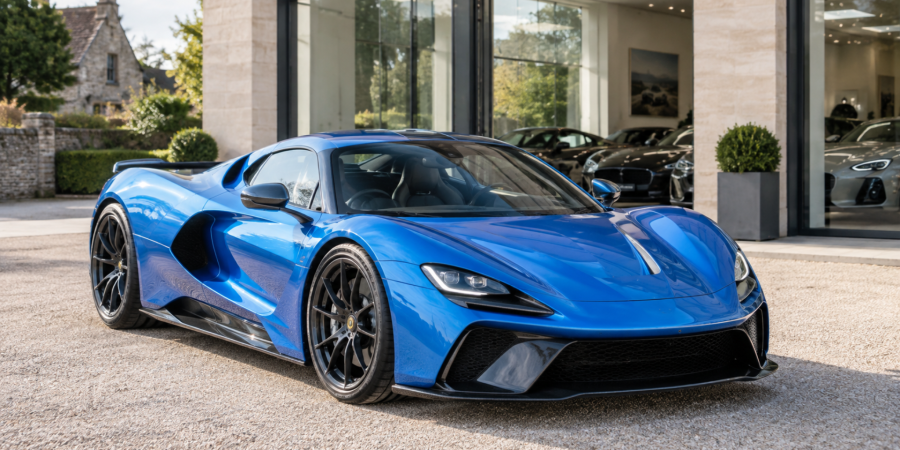
Can you reclaim VAT on a car? Lessons from a £477,508 tribunal win.
A luxury vehicle hire business has won a dispute over £477,508.60 of VAT on a hypercar. For business owners, the useful lesson is about the purpose of a purchase and the evidence behind a VAT claim.
By RiverView Portfolio · Reviewed 21 September 2026
Can a business reclaim VAT on a car?
VAT on buying a car is normally blocked. Exceptions can apply, including qualifying commercial hire and cars intended exclusively for business with no private availability. Luxurico succeeded under the hire exception. Buying a car through your company does not, by itself, make the VAT recoverable.
What happened in the Luxurico VAT case?
Luxurico Ltd ran a luxury vehicle hire business. It incurred £477,508.60 of VAT when importing and acquiring a hypercar in November 2020. HMRC disputed its right to recover that VAT.
The question was whether the company primarily intended to use the car for self-drive hire or hire with a driver when it acquired it. The tribunal accepted that it did and allowed the appeal.
Pre-acquisition marketing and customer interest supported the commercial explanation. Covid disruption and an accident helped explain why later hire activity fell short of expectations.
The decision was released on 27 August 2026. Read Luxurico Ltd v HMRC [2026] UKFTT 1252 (TC) for the findings and reasoning.
Why did intended use matter?
The relevant test concerned the main intended use when the VAT was incurred. Later events could help establish that intention, but they did not replace the test.
HMRC questioned gaps in the hire, mileage and insurance records, as well as social media material suggesting personal enjoyment. The tribunal considered the evidence as a whole and accepted commercial hire as the dominant intended purpose.
The hire-car exception and the ordinary company-car rules.
Two different routes to recovery are easy to confuse. HMRC’s guidance on qualifying purposes covers cars bought primarily for self-drive hire, hire with a driver carrying passengers, or driving instruction.
The separate exclusive-business route requires business-only use and no availability for private use. HMRC’s guidance on exclusive business use explains that condition.
Commercial hire
The main intended purpose must meet the qualifying hire rules. Ordinary input tax conditions still apply.
Exclusive business use
The car must be intended for business-only use and must not be available for anyone’s private use.
Consequently, a director’s car used mainly for customer visits but also available for weekends does not pass the exclusive-business test simply because most journeys are for work.
Five checks before you reclaim VAT on a car.
Our recommendation is to review the transaction before committing to the purchase. Use these questions to organise the discussion with your accountant.
- Which rule supports the claim?
Write down whether you are relying on commercial hire, exclusive business use or another applicable exception. A general intention to use the car for work is not enough. - What evidence exists before the purchase?
Keep dated business plans, customer enquiries, proposed hire terms, marketing and insurance arrangements where relevant. Records should reflect genuine plans and commercial activity. - Does the paperwork match the transaction?
Check the buyer, invoice, VAT treatment and any import documents. A car’s price or a VAT-registered seller does not establish that there is separately recoverable VAT. - How will you record and control use?
For a hire business, retain booking, insurance and mileage records. If relying on exclusive business use, address who can access the car and how private availability is prevented. - What happens if circumstances change?
Keep records of cancellations, repairs and any change in purpose. Review the VAT treatment when the car’s use changes, rather than assuming the original claim settles everything.
Consistent records also make day-to-day reporting easier. Our bookkeeping support can help businesses keep their financial information organised.
What should you avoid assuming?
This was a decision about a particular business, vehicle and body of evidence. It should not be treated as automatic permission to recover VAT on a director’s sports car.
Purchase VAT also differs from VAT on leasing, maintenance and fuel. Those costs have their own rules. In addition, a later move to a non-qualifying use can create an output VAT charge. See HMRC’s motoring expenses guidance, particularly sections 3 and 4.
Keep the purchase decision separate from the claim. A business should understand what it can afford if VAT recovery is restricted or challenged. Our business and financial strategy support can help put a significant purchase into the wider financial plan.
Check the VAT position before buying.
If you are buying a business vehicle, planning a hire operation or reviewing an existing claim, speak to RiverView Portfolio. Our team supports businesses in Calne, Wiltshire and beyond with practical tax advice.
We can help you identify the relevant rules and the records you need before a large VAT figure becomes part of your budget.
Talk to RiverView PortfolioReclaiming VAT on cars: common questions.
Can I reclaim VAT because my limited company buys the car?
Company ownership alone does not establish entitlement. You need an applicable exception to the car input tax block, together with the normal conditions for recovering input VAT.
Does a business-use percentage establish a purchase VAT claim?
Not by itself. If you rely on the exclusive-business exception, private availability matters as well as journeys actually made. Commercial hire uses a different test.
Does the Luxurico ruling mean records no longer matter?
No. Objective evidence was central to the result. Keep records of the purchase plans and later use so that the position can be explained and reviewed.