
Quick answer
The Companies House accounts reforms 2028 mean all UK companies must file accounts through commercial software. Small companies and micro-entities must also file profit and loss accounts, although the government says they can opt out of showing those profit and loss accounts on the public register.
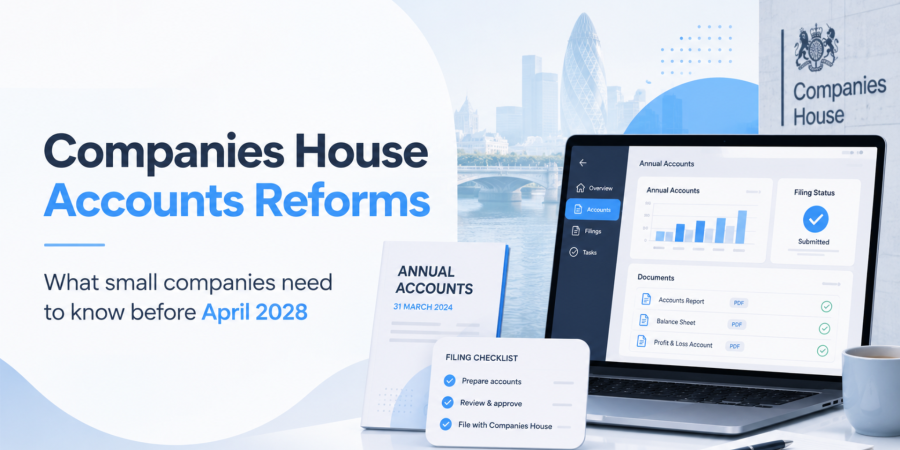
Companies House accounts reforms 2028 are now confirmed, with major changes coming for small companies, micro-entities and directors who file annual accounts.
After pausing the timetable last year, the government has now confirmed how it plans to bring in the accounts filing reforms under the Economic Crime and Corporate Transparency Act 2023.
The headline is simple. The reforms are still going ahead, but the deadline has moved.
Instead of April 2027, the main accounts filing changes now start from April 2028. That gives companies more time to prepare, but it does not give directors a reason to ignore the issue.
The Companies House accounts reforms 2028 should act as a preparation window, not something to leave until the next filing deadline arrives.
For many small companies, this will be one of the biggest Companies House filing changes in years.
What are the Companies House accounts reforms 2028?
The reforms aim to improve the quality and reliability of financial information at Companies House.
Profit and loss filing
Small companies and micro-entities must file profit and loss accounts with Companies House.
Publication opt-out
Small and micro-entities can opt out of showing their profit and loss accounts on the public register.
Software-only filing
All companies must file annual accounts using commercial software in iXBRL format.
Abridged accounts removed
Small companies will no longer use abridged accounts.
The key date
Companies House accounts reforms 2028: the key date
The government says the accounts reforms will now start from April 2028. This gives companies one full accounting year plus nine months to prepare.
Small companies and micro-entities must file profit and loss accounts
At the moment, many small companies and micro-entities only file limited financial information at Companies House.
Under the reforms, they must file a profit and loss account with Companies House as part of their annual accounts.
That does not mean every detail will automatically appear online.
The government says small companies and micro-entities can opt out of showing their profit and loss accounts on the public register. It has not yet confirmed the exact opt-out process.
Important distinction
Companies may still need to file the information with Companies House. Even if a company opts out of public publication, Companies House, HMRC and law enforcement should still have access to the filed profit and loss information.
Why this matters for business owners
Small company directors should treat this as more than an admin change.
Competitors, suppliers, customers, lenders and other contacts often use Companies House information to assess a business. Even with the proposed publication opt-out, directors need to understand what they must file, what others may see and what stays private.
There is also a compliance point.
If your company currently prepares accounts with minimal Companies House disclosure in mind, your process may need to change. Your accountant should check the accounts, file them in the right format and make sure the records support the figures.
This also shows the direction of travel. Companies House is becoming a more active gatekeeper, not just a basic register of company information.
Software-only filing under the Companies House accounts reforms 2028
From April 2028, all UK companies must file their accounts using commercial software in iXBRL format.
One of the biggest practical parts of the Companies House accounts reforms 2028 is the move to software-only accounts filing.
What this means in practice
The rule applies whether the company files its own accounts or asks an accountant or agent to file them.
Companies House web and paper filing routes will close for accounts filings. Companies House expects web filing to remain available for other statutory filings, such as confirmation statements and changes to director details.
Companies that already use cloud accounting software and work with an accountant may not notice a dramatic change.
Who needs to prepare most?
Companies that still use manual records, spreadsheets, paper filing or Companies House WebFiling will feel the change more. They need the right software, a clear filing process and enough time to fix problems before the deadline.
Director takeaway
If your company still relies on very simple records, manual spreadsheets or last-minute filing, start the practical work before 2028. The deadline has moved, but the direction has not.
Abridged accounts are going
The reforms also remove the option to file abridged accounts.
This change should make filing options more consistent and reduce confusion around which version of the accounts a company should send to Companies House.
Directors should not assume the current filing format will continue. The accounts preparation process may need a review well before the 2028 deadline.
Audit exemption statements need closer attention
Companies that claim audit exemption will need to give a stronger eligibility statement.
In plain English, directors must say which exemption they claim and confirm that the company qualifies.
This matters because audit exemption is not just a box-ticking exercise. Directors must make sure the company can use the exemption.
If the company’s position has changed, or if it sits close to the relevant thresholds, the accounts process should include a proper review before anyone claims the exemption.
How should directors prepare for the Companies House accounts reforms 2028?
April 2028 may feel a long way off, but these reforms could create problems for companies that leave preparation too late.
For directors, the Companies House accounts reforms 2028 are a useful prompt to review accounts, software, records and wider company compliance together.
Practical checks to start now
Do not confuse delay with cancellation
The government has delayed the reforms, but it has not cancelled them.
It has also given companies and advisers more time to prepare.
That extra time only helps if directors use it properly.
Well-organised companies should manage the reforms without panic. Companies with weak records, outdated software or inconsistent accounts processes may face a last-minute compliance headache.
Need help preparing for the Companies House accounts reforms 2028?
RiverView Portfolio can help you review your accounts process, company secretarial records and filing responsibilities before the Companies House accounts reforms 2028 arrive.
How RiverView Portfolio can help
At RiverView Portfolio, we help company directors stay on top of accounts, tax and Companies House obligations.
If you are unsure how the Companies House accounts reforms will affect your company, now is the right time to review your filing process.
Our team can help you check what your company currently files, whether your records and software are ready, whether the company claims the right exemptions and which company secretarial records need attention.
You can also read more about our Company Secretarial Services if you want support keeping your statutory records and Companies House filings in order.
Useful official resources
For further reading, these official Companies House and GOV.UK pages are useful reference points:
FAQs
When do the Companies House accounts reforms start?
The main accounts filing reforms now start from April 2028. The government moved the timetable back from April 2027 to give companies more time to prepare.
Will small companies have to file profit and loss accounts?
Yes. Small companies and micro-entities must file profit and loss accounts with Companies House under the reforms.
Will profit and loss accounts appear on the public register?
Not necessarily. The government says small companies and micro-entities can opt out of showing their profit and loss accounts on the public register. It has not yet confirmed the exact opt-out process.
Can HMRC still see the profit and loss account?
Yes. Even where a company opts out of public publication, Companies House, HMRC and law enforcement should still have access to the filed profit and loss information.
Will Companies House WebFiling still exist?
Companies House says web and paper filing routes will close for accounts filings from April 2028. It expects web filing to remain available for non-accounts filings, such as confirmation statements and director detail updates.
Does software-only filing apply if my accountant files my accounts?
Yes. The software-only accounts filing rule applies whether a company files its own accounts or uses an accountant or agent.
Are abridged accounts being removed?
Yes. The reforms remove abridged accounts as part of the wider plan to simplify accounts filing options.
What should directors do before April 2028?
Directors should review how the company prepares and files accounts, check whether the software and records are suitable, confirm whether the company claims audit exemption correctly and speak to their accountant about the practical impact.